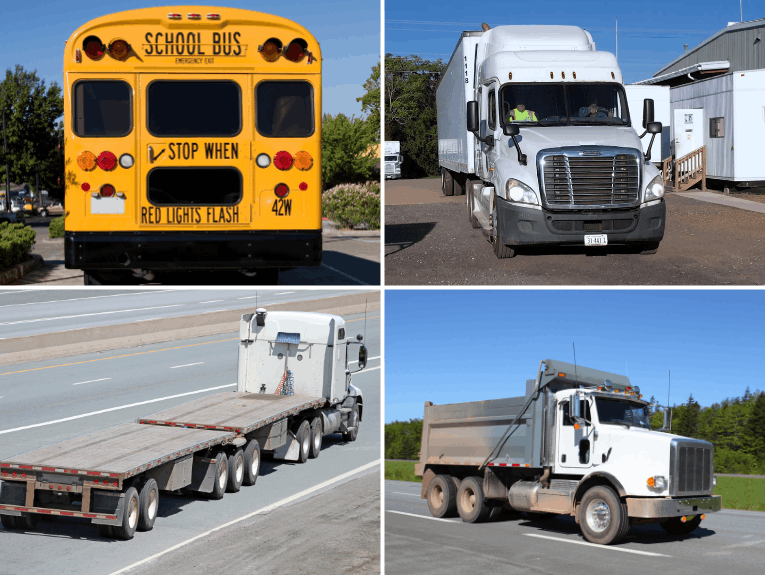
For many people, CDL jobs begin with over-the-road positions. But there are many truck driving job types out there that can help you build experience, driving skills, and knowledge.
For someone stuck in a low-paying job they don’t like, a commercial driver’s license can change their career outlook quickly, and with many options.
Class A and Class B licenses unlock different positions, and the right fit depends on lifestyle, physical ability, and income goals.
Class A CDL Jobs
A Class A CDL offers the widest range of job types and the highest earning potential, especially when endorsements are added. Class A drivers are also qualified to operate vehicles that require a Class B or C CDL.
| Job Category | Pay Range | Home Time | Experience Required |
| Over-the-Road Driver | $71K–$108K | Regional: more predictable; OTR: extended away | 1+ year |
| Tanker Driver | $66K–$99K (higher with X endorsement) | Varies | 1+ year; N or X endorsement |
| Flatbed Carrier | $58K–$87K | Varies | 12 months OTR |
| Auto Transport | $55K–$89K | Varies | 1–2 years |
| Owner-Operator | $80-$128K (average) | Flexible | 6 months OTR |
| Local route | $50–$86K | Weekly | None |
Source: Glassdoor
Over-the-Road Truck Driver
OTR drivers move freight between terminals across regional or national routes. Most positions require drivers to be at least 21 years old and to have at least 1 year of experience.
Drivers who want strong earning potential and do not mind time away from home. Regional OTR routes offer more predictable schedules than national runs.
Tanker Truck Driver
Tanker drivers transport liquids or gases in quantities of 1,000 gallons or more. The job requires a Tanker endorsement, and hauling hazardous materials requires a Hazmat endorsement.
Drivers who want above-average pay and are willing to learn a more technical specialty. The Tanker and Hazmat endorsements are among the most valuable CDL endorsements worth getting for long-term earning potential.
Flatbed Carrier
Flatbed drivers earn premium rates largely because the job entails greater physical demands. Tarps can weigh between 85 and 120 pounds, and chains run about 40 pounds each. Training covers load securement, tarp types, and permit requirements. Most employers want at least 12 months of OTR experience.
Physically capable drivers who do not want to sit idle at loading docks and want to earn more than standard van work pays from early in their career.
Auto Transport Driver
Car hauler drivers coordinate up to eight pickups and deliveries per trip while safely loading, securing, and unloading vehicles at each stop. Car transport drivers can command premium rates, but companies that hire them typically require one to two years of tractor-trailer experience with car hauler trailers.
Detail-oriented drivers who want high earning potential and do not mind learning specialized loading procedures.
Owner-Operator
Owner-operators can receive up to 90% of load revenue, and some positions advertise potential annual earnings of $200,000 or more. While this path can be very lucrative, it adds business responsibilities on top of the driving work.
Experienced drivers who want maximum income control and are ready to manage their own schedule, expenses, and business relationships.
Class B CDL Jobs
A Class B CDL typically allows you to drive local routes and have daily home time, and more predictable schedules, but generally pay less than Class A positions.
| Job Category | Pay Range | Home Time | Experience Required |
| Dump Truck Driver | $57K-$88K | Daily | Under 6 months accepted |
| Delivery Driver | $42K-$63K | Daily | Minimal |
| City Bus Driver | $54K-$86K | Daily | 3 years driving |
| Cement Mixer Driver | $58K–$84K | Daily | Minimal |
Source: Glassdoor
Dump Truck Driver
Construction sites depend on dump truck operators to haul gravel, dirt, asphalt, and debris. Most positions require a valid Class B license, and some require the Tank Vehicle endorsement.
Drivers who want to be home daily and prefer working near job sites rather than running long routes.
Delivery Truck Driver
Local delivery drivers operate straight trucks and box trucks on set regional routes. Schedules are typically five days per week with consistent hours. Customer interaction is part of the job, and some positions involve specialized equipment that requires additional endorsements.
Drivers who prioritize home time and routine. This is one of the more stable entry points for someone new to commercial driving.
Bus Driver
School districts, charter companies, and transit systems hire CDL holders for bus routes. Requirements include being at least 21 years old, having 3 years of driving experience, meeting vision standards, and providing a fitness statement from a federal medical examiner. Background checks are standard for positions that involve transporting students.
Drivers who enjoy working with people and want a community-facing role with a consistent schedule.
Cement Mixer Driver
Class B concrete operators maneuver heavy trucks into tight construction sites and manage the mixing process. Physical demands include climbing ladders and lifting up to 50 pounds regularly. Most positions offer home-daily schedules and five-day work weeks.
Drivers who want physical, hands-on work without long routes and prefer a dependable daily schedule.
Entry-Level CDL Jobs for New Drivers
CDL jobs with no experience required do exist, and they are not rare. Entry-level positions provide steady pay while drivers build experience that opens doors to specialized roles.
Local Route Driver
Many companies require zero prior experience for local-route drivers. No-touch freight means drivers are not responsible for loading or unloading. Benefits, including medical, dental, and vision coverage, often begin after 30 days.
Moving Company Driver
Residential moving creates consistent demand for CDL drivers. Responsibilities include loading furniture, securing cargo, and unloading at each destination. Tight streets and driveways make this good practice for maneuvering skills. Customer service is a significant part of the job.
Parts Delivery Driver
Automotive parts delivery offers local routes, predictable hours, and nightly home time. Drivers transport components from distribution centers to repair shops, dealerships, and industrial clients. Verifying manifests and maintaining customer contact at each stop are part of the daily routine. Clean driving records matter more than formal education for most of these positions.
Driver’s Helper
Helper positions place new drivers alongside experienced operators on waste and recycling routes. The focus is on physical work rather than solo vehicle operation: lifting containers, operating equipment once trained, and keeping pace across multiple stops. Prior experience in labor, warehouse, or construction is helpful but not required.
How to Choose the Right CDL Job
A CDL opens the door, but personal circumstances determine which jobs make sense for you.
- Home time is one of the most important factors. Local drivers return home every night. Regional work typically brings drivers back on weekends. OTR positions pay more but mean longer stretches away from family. Many CDL jobs are closer to home than people expect, and job postings should be read carefully before applying.
- Physical demands vary widely across specialties. Flatbed work involves handling heavy tarps and chains every day. Most large carriers cap loading and unloading requirements at under 100 pounds. Drivers should honestly assess what they can do before targeting a specialty.
- Endorsements directly affect earning potential. The Passenger endorsement covers vehicles with 16 or more passengers. The Double and triple trailers endorsement allows you to tow 2-3 trailers at the same time. Each endorsement opens new job opportunities. Planning endorsements around career goals early makes the path more efficient.
- Benefits and company stability matter more than most new drivers expect. Strong packages include health insurance, retirement matching, paid time off, and mental health support. A reliable company with solid benefits can deliver more long-term value than the highest base pay offer from a less stable employer.
Frequently Asked Questions
Is a CDL worth it for someone with no trucking background?
Yes. The trucking industry faces a shortage of more than 82,000 drivers. CDL training typically lasts four to eight weeks, and entry-level positions with paid training are available in most markets.
What are the best CDL jobs for new drivers with no experience?
Local route driving, parts delivery, moving company work, and driver’s helper positions are built for new CDL holders. Many companies recruit recent graduates and provide paid on-the-job training.
How much do CDL drivers make in their first year?
Entry-level drivers earn between $45,000 and $65,000 per year, according to BLS data. Pay increases as drivers add endorsements and move into specialized roles.
What CDL endorsements should I get?
The Hazmat and Tanker endorsements are among the most in-demand additions to a Class A CDL. Both require a written knowledge test, and Hazmat also requires a TSA background check and fingerprinting.
How long does CDL training take?
Most programs run four to eight weeks. Programs that combine classroom instruction with yard practice and on-road driving produce the most job-ready graduates.
Can CDL drivers move into higher-paying roles without leaving the industry?
Yes. Building a clean safety record, earning endorsements, and gaining experience are the clearest paths. Experienced CDL holders also commonly move into driver trainer, dispatcher, or fleet safety coordinator roles.
Do CDL jobs exist outside of trucking?
Yes. Construction companies hire dump truck and cement mixer operators. School districts and transit agencies employ Class B CDL holders as bus drivers. Energy companies recruit tanker and flatbed drivers to transport fuel and equipment.