Are you considering a career as a commercial driver? A Commercial Driver’s License (CDL) is the first step, but should you pursue a Class A or Class B license? This guide breaks down the differences between the two license types and can help you decide which license matches your goals, lifestyle, and income expectations in the trucking field.
What is a Class A CDL?
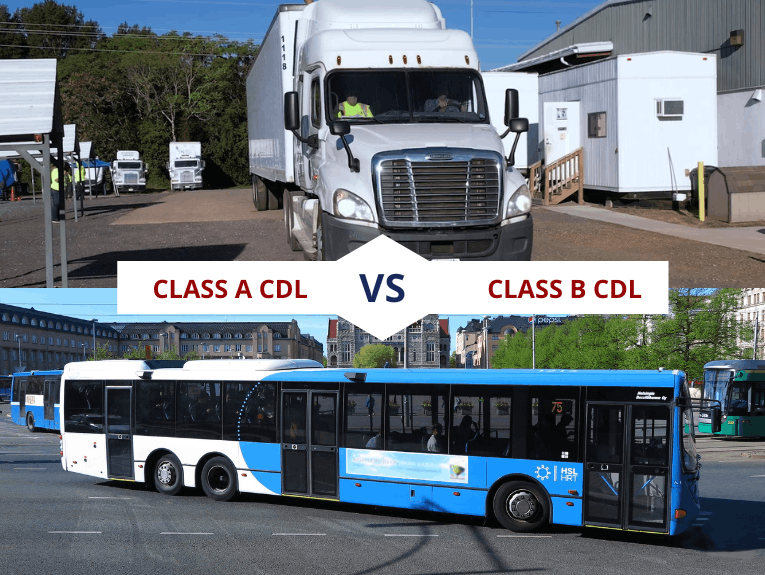
A Class A CDL is your ticket to drive large commercial vehicles, including:
- Tractor trailers (18-wheelers or semi-trucks and trailers)
- Flatbed trucks carrying oversized commercial loads
- Livestock carriers transporting animals across states
- Certain Class B vehicles
A CDL A opens many doors to your career, especially if you want a long-haul truck driving career with varied vehicle options. The Class A CDL’s versatility gives you more control over the types of truck driving jobs you can pursue.
Weight and Towing Limits for Class A
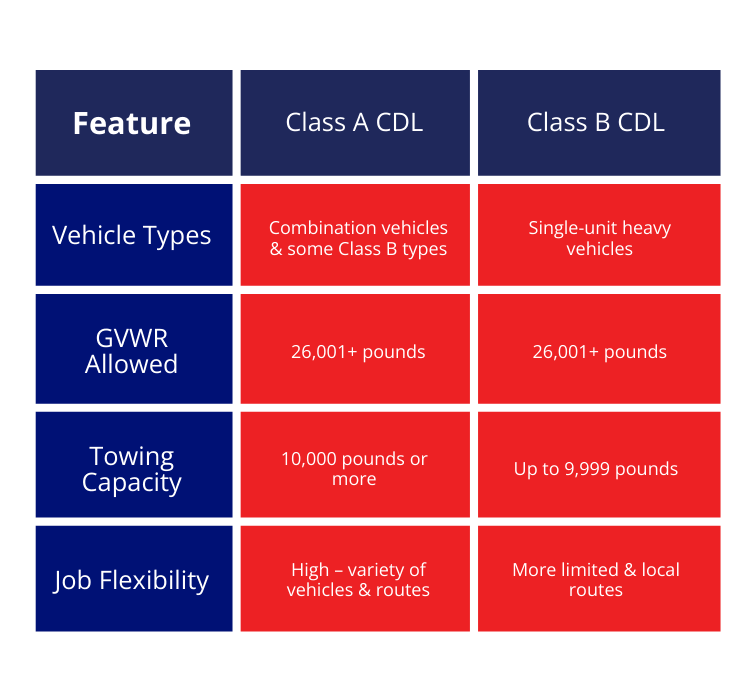
Class A drivers can haul vehicles or combinations with a Gross Vehicle Weight Rating (GVWR) over 26,001 pounds with trailers weighing 10,000 pounds or more. Drivers generally pursue freight jobs that require hauling heavy and large loads across the trucking industry.
Job Opportunities with Class A License
Class A CDL holders enjoy:
- Access to a wider range of trucking jobs in transportation and logistics
- Higher average salaries due to specialized skills
- Job placement assistance from many driver training programs
If you’re aiming for career growth and diversification, Class A is the top choice. A Class A CDL allows you to pursue jobs like:
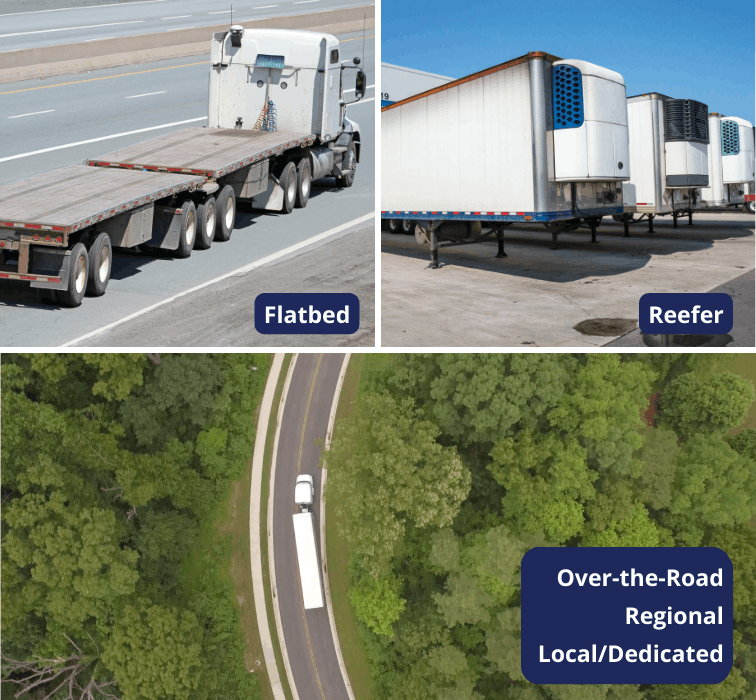
- Over-the-Road Driver: Long-haul trucking across the country with trip planning responsibilities
- Regional Driver: Driving within a specific region, which generally offers more home time than OTR
- Local/Dedicated Driver: Delivers for specific clients and often returns home daily
- Flatbed Driver: Transports heavy or oversized specialized loads as an equipment hauler
- Refrigerated Driver: A Reefer driver hauls temperature-controlled goods that require refrigeration
What is a Class B CDL?
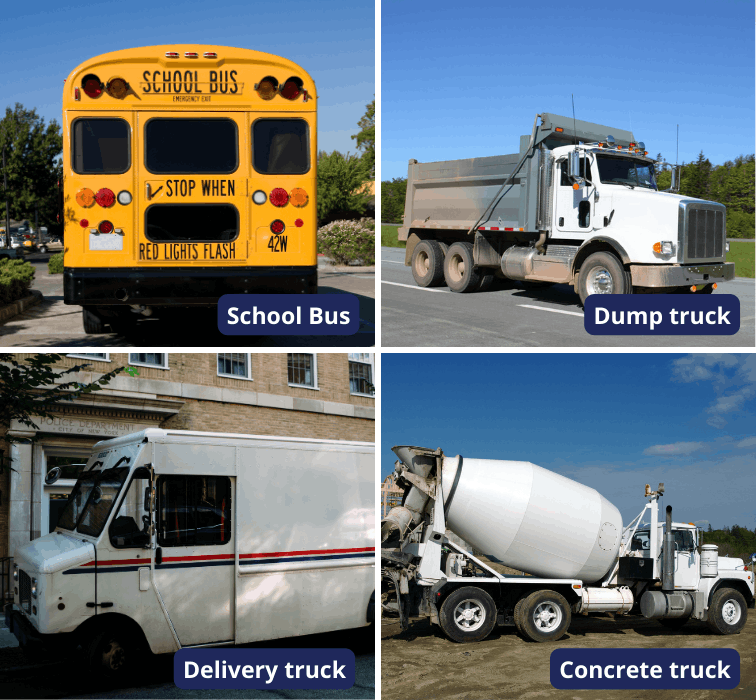
A Class B CDL authorizes you to drive heavy commercial vehicles but with different weight limits. This license covers:
- Delivery trucks like straight trucks and box trucks for delivery driver positions
- Segmented buses used in public transit and tours
- Dump trucks for construction and waste management
Class B is ideal if you prefer shorter routes and local driving jobs.
Weight and Towing Limits for Class B
You can drive vehicles with a GVWR of 26,001 pounds or more. However, towing is limited to under 10,000 pounds. This limitation means no large trailers or combination vehicles.
Common Class B Jobs
Many Class B holders work in:
- Local delivery services as a delivery driver
- Bus driving for public transit, schools, or tour companies as a shuttle driver (these roles may require endorsements)
- Concrete mixer
- Food Service driver
- Utility Vehicle Operator
- Dump truck operations near urban areas
These jobs offer steady schedules but typically lower pay than Class A positions. Some commercial driver roles are even evolving to include autonomous vehicle driver positions in modern fleets.
Key Differences: Class A vs. Class B CDL
How to Choose the Right CDL for You
In deciding which driver training program is right for you, consider your lifestyle priorities and income expectations. A Class B CDL works well if you prefer local routes and shorter driving periods. Class A suits people who want access to better paying jobs and more variety.
Your family situation, home time requirements, and financial goals all play a role in this decision. You can also start with Class B and get a Class A later. Many drivers earn a Class B license through a driver training program, build experience and increase earning potential, then get a Class A when they feel more comfortable with longer routes and more responsibility.
Conclusion
Choosing which CDL to get affects your career for years to come. But for someone hoping for an over-the-road truck driving job, or local or regional routes hauling cargo, a Class A CDL is an easy decision. A Class B CDL works fine for someone looking to drive a city bus or isn’t interested in working for major truck driving companies. Evaluate your career goals, personal needs, and interests before deciding which CDL is right for you.
Frequently Asked Questions
Can I drive Class B vehicles with a Class A CDL?
Yes! A Class A license covers certain Class B vehicles, giving you more job flexibility.
How long does it take to get Class A CDL certified?
Training is different based on which driver training program you take, but Class A training typically lasts several weeks to months. At CDS Tractor Trailer Training, the Class A program is 160 hours and the Class B program requires 120 hours.
Which is easier to get, Class A or Class B?
Class B is easier to get, since it requires less-complex skills than a Class A CDL.
Do Class A drivers earn more?
Yes. Class A drivers generally earn higher salaries, since they have broader job responsibilities.
Can I drive Class B trucks with a Class A CDL?
Yes, a Class A CDL also covers Class B vehicles. However, if the vehicle requires an endorsement, you must still receive that endorsement to drive that vehicle.
Can I upgrade from Class B to Class A CDL?
If you already have a Class B CDL, you can upgrade from Class B to Class A. The Class B to Class A CDL requirements involve additional training on combination vehicles and developing increased towing capacity skills.
Ready to Take the Next Step?
Start your trucking career today! Whether you want to drive the biggest rigs with a Class A CDL or manage local deliveries with a Class B CDL, professional training is your first step.