CDL Endorsements Can Level Up Your Truck Driving Career

CDL endorsements open doors to specialized positions that those with only a basic CDL cannot access. These additional qualifications let you operate specific vehicles and haul cargo types that standard CDL holders aren’t authorized to handle.

Drivers who want to level up their career pursue endorsements and pursue the higher-paying trucking jobs that come with them.

What are Endorsements?

CDL endorsements are special authorizations you can add to a CDL that permit drivers to operate specific types of vehicles or haul specialized cargo.

These cargo types must be handled differently than most loads, requiring additional skills, certifications or safety procedures, including for transporting people or hauling hazardous materials. You must pass additional tests and/or training to earn an endorsement.

Endorsements appear as letters printed on your CDL, indicating you are authorized to perform these driving tasks.

Truck Driving Endorsements: What Each Unlocks

T Endorsement: Double and Triple Trailers

The T endorsement lets you pull 2 or 3 trailers at once. In Virginia, you only need to pass a written test; no driving exam is required. This endorsement works with Class A licenses and qualifies you for freight companies that need efficient cargo transport.

N Endorsement: Tanker Operations

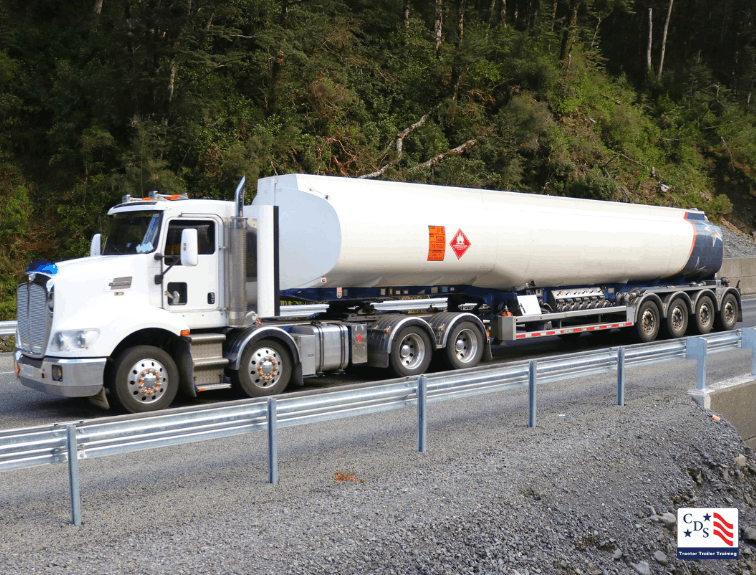
The N endorsement qualifies you to haul liquids and gases in tank vehicles. Any tank over 119 gallons individually, or combined tanks over 1,000 gallons, requires this endorsement.

H Endorsement: Hazardous Materials

The H endorsement authorizes you to transport hazardous materials (Hazmat) requiring placards. Before getting this endorsement, you must complete Entry Level Driver Training (ELDT), pass a written test, and complete a TSA background check. You’ll need to renew this endorsement with every CDL renewal.

X Endorsement: Hazmat Plus Tanker

The X endorsement combines hazmat and tanker qualifications. This dual certification appears when you hold both H and N endorsements simultaneously.

P Endorsement: Passenger Vehicles

Want to drive people instead of freight? The P endorsement authorizes you to operate vehicles carrying 16 or more passengers. This requires both written and driving tests in the actual vehicle type.

S Endorsement: School Bus Operations

The S endorsement qualifies you to transport students. This requires both written and driving tests, plus you need the P endorsement first—or you can apply for both together.

How CDL Endorsements Can Boost Your Career

Higher Pay for Specialized Driving Roles

Companies pay drivers premium rates if they can run routes that require endorsements. Endorsed drivers earn 15% to 35% more than their non-endorsed counterparts. X-endorsed drivers command top industry wages because they can handle the most specialized loads.

CDL Endorsements by License Type
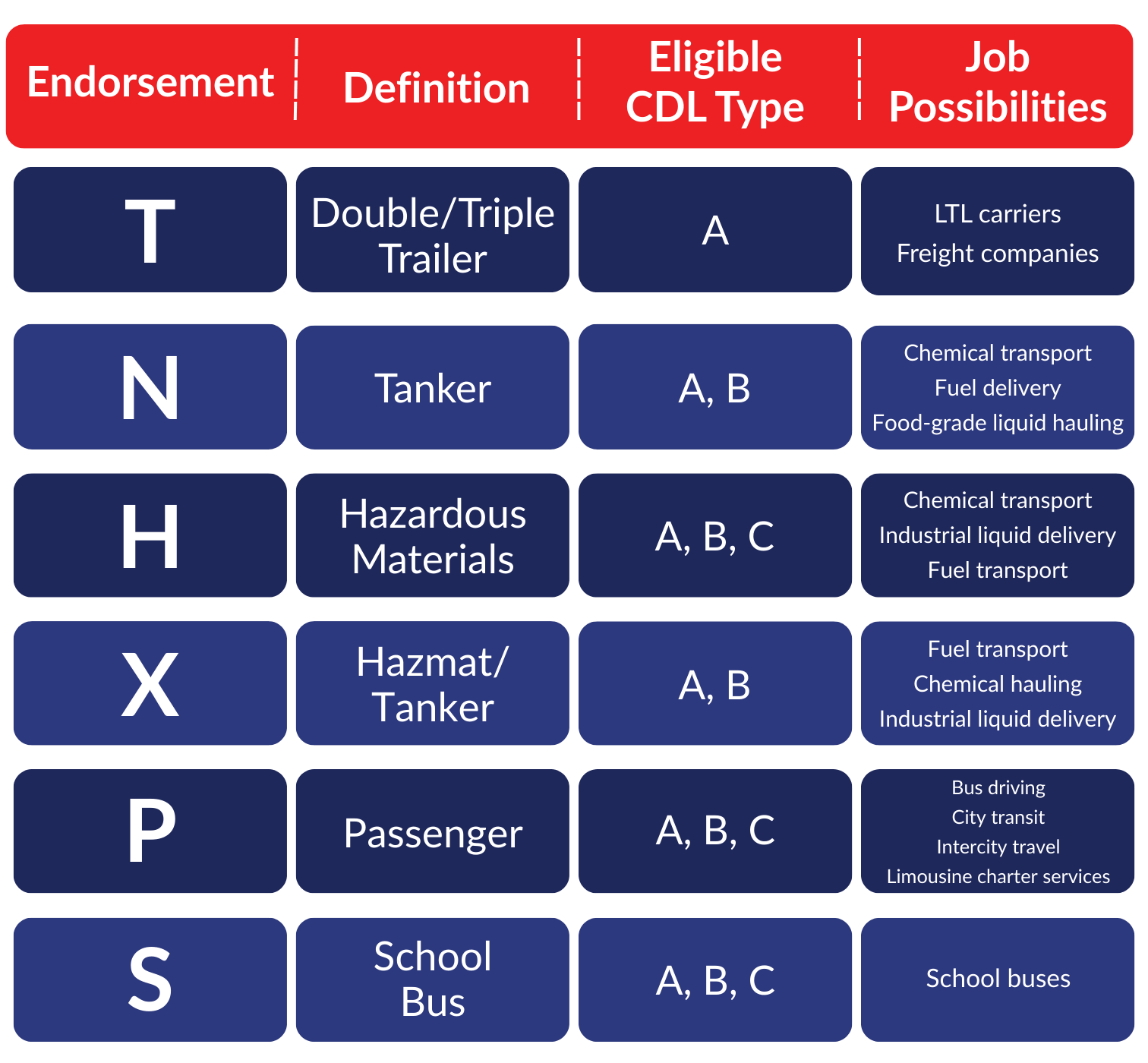
Graphic of a table of different endorsements

Why Employers Want Endorsed Drivers

Companies hire endorsed drivers for a very practical reason: versatility. Drivers with endorsements can handle more and different kinds of assignments than drivers without them. When loads change or special cargo needs transport, endorsed drivers can do the jobs other drivers can’t.

Endorsements give drivers a competitive and financial advantage. While other candidates need months of additional training, an endorsed driver is ready to climb into the cab.

Each CDL endorsement allows you to haul specialized materials, or, under certain circumstances, to haul other types of cargo.

Getting a CDL Endorsement

The endorsement process follows a clear path. Each step builds toward expanding your career options.

Study for the Written Tests

Each endorsement requires you to pass a specific knowledge test at your state’s DMV. The Virginia State CDL manual contains everything you need to know. Practice tests help identify areas that need more attention. Tests are given in English only.

The written exams focus on real-world situations you’ll face on the job. When you study pre-trip inspection procedures for tankers, you’re learning safety habits that make you valuable to employers.

Have a Completed ELDT-Compliant CDL Training Course

As with all new CDLs, you must have completed Entry-Level Driver Training (ELDT) training to have an endorsement for anyone who obtained their CDL after Feb. 2022.

ELDT can be obtained from FMCSA-registered providers from an ELDT-compliant CDL training program. Drivers who obtained a CDL before Feb. 2022 are exempt from this policy.

Complete Background Checks

Hazmat endorsements require fingerprinting and TSA security screening. This process takes 30-60 days to complete. The background check verifies you meet security standards for transporting hazardous materials.

You must also maintain a clean motor vehicle record (MVR).

Start this process early. You can study for the written test while your background check is being processed.

Take Skills Tests When Required

P and S endorsements require road tests in actual buses or school buses. These practical exams verify that you can safely operate passenger vehicles under real conditions.

Skills tests prove you can handle the responsibility. Passenger safety demands more than book knowledge.

Other endorsement types only require passing a written test.

Conclusion

Endorsements create new job possibilities that basic CDL holders can’t access. Some drivers focus on local passenger routes for consistent home time. Others pursue hazmat loads that command premium pay. The choice depends on what matters most for your situation.

The process takes effort and in some cases training, but Virginia’s commercial drivers who invest in additional qualifications consistently report better job opportunities and higher earnings. Companies actively seek endorsed drivers because these qualifications demonstrate commitment to professional growth.

Your CDL opened the door to commercial driving. Endorsements take your career even further.

Ready to explore which endorsements to add to your CDL? CDS Tractor Trailer Training can help you check your eligibility and understand the requirements for your target specializations.

FAQs

What are the most valuable CDL endorsements for career advancement?

The most valuable CDL endorsements often include Hazmat (H), Tanker (N), and their combination (X). These endorsements can significantly increase earning potential, with endorsed drivers making 15% to 35% more than their non-endorsed counterparts. However, the best endorsements depend on your career goals and the local job market.

How many CDL endorsements are there, and what do they cover?

There are six main CDL endorsements:

·      T (Double/Triple trailers)

·      P (Passenger vehicles)

·      N (Tank vehicles)

·      H (Hazardous materials)

·      S (School bus)

·      X (Hazmat + Tanker combination)

Each endorsement allows drivers to operate specific types of vehicles or transport particular kinds of cargo.

Which CDL endorsement is considered the most challenging to obtain?

The Hazardous Materials (H) endorsement is often considered the most challenging to obtain. It requires passing a written test, completing ELDT, and undergoing a Transportation Security Administration (TSA) background check. When combined with the Tanker (N) endorsement to form the X endorsement, it becomes even more demanding but significantly increases earning potential.

Can I get multiple endorsements on my CDL?

Yes. Multiple endorsements create more opportunities. While other drivers compete for standard freight positions, endorsed drivers can pursue specialized roles that pay more and match their lifestyle preferences.

Truck Driver Training: Questions Students Ask First

The truck driving school you choose shapes your career for years to come. As you begin your CDL training, you should create a list of questions to ask before you commit to a school. You can ask these questions of an admissions rep, a current or former student, or even of yourself as you do research on the school.

Your CDL Training Needs

Virginia is home to many reputable CDL training facilities, but not all programs have the same strengths. Identify your most pressing needs and compare against the school’s strengths. How many of your most pressing needs do they meet?

Ask this:

  • What type of CDL training do you offer: Class A, B, and/or C?
  • How many students are there for each instructor?
  • Does your school offer evening or weekend programs?
  • Do you offer support for students who need additional help?

Truck Driving School Reputation, Safety & Student Support

A CDL school’s reputation tells you how students and former students regard the school, how safe its training environment is, and how much support you’ll get along the way. A safe, supportive learning environment helps students stay focused and motivated.

Ask this:

  • How long has your school been training CDL students?
  • Are your instructors experienced drivers with truck driving experience?
  • Is your training program ELDT compliant?
  • How flexible is the schedule if I have work or family responsibilities?

Equipment, Facilities & Training Environment

Good equipment, experienced trainers, and higher job placement rates are signs of a good truck driving program. Equipment quality affects comfort, safety, and job satisfaction.

Equipment questions also tell you whether you’ll operate newer models with modern safety features or older trucks that require more maintenance and may be out of sync with current technology.

Ask This:

  • What types of trucks and trailers will I train on?
  • Does your program cover different truck sizes and configurations?
  • Will my truck have an air‑ride suspension system?
  • Are your trucks manual, automatic, or do you have both?
  • Do you train students on modern safety features and technology?

Driving Hours & Hands‑On Experience

Behind-the-wheel training is where students move from classroom knowledge to real-world driving skills. The time you spend in the truck, and the quality of that time, can be the difference between passing your CDL test confidently or struggling to meet the requirements.

CDL schools will give you supervised driving hours to practice shifting, backing up, turning, and handling real-world truck-driving scenarios like lane changes, traffic stops, and vehicle inspections. Some programs also include basic maintenance training, so you know how to check your equipment and handle minor issues on the road.

More hands-on experience means more confidence and a smoother transition into your first trucking job.

Ask This:

  • How many hours of behind‑the‑wheel driving will I get?
  • How much time will I spend practicing backing maneuvers?
  • Will I train on the same type of equipment I’ll use in my first job?
  • Do you offer simulator training before students get into a truck?

Two truckers sitting in semi truck, behind the head view

Cost and Financial Aid Questions

Understanding the full cost for your CDL training program, and how you’ll be able to pay for it, is extremely important. Many students worry about tuition, but don’t realize that grants, workforce funding, and employer reimbursement programs can cover a large portion of their expenses.

These questions can help you reduce or avoid debt and start your career with confidence.

Ask This:

  • What is the total cost of the CDL training program?
  • Are grants, tuition assistance, payment plans. or WIOA funding available?
  • Are there any additional fees I should expect (testing, permits, endorsements, retakes)?

Job Placement Support & Career Outcomes

Relationships with local and national carriers allow schools to bring recruiters to campus, help them get pre-hire letters, and offer coaching for applications and interviews.

Ask about job placement rates and which companies hire their graduates. A school with strong career outcomes will be proud to share that information and will help you feel confident about your future.

Ask this:

  • How many of your graduates get hired after completing the program?
  • Which local, regional, or national carriers hire your graduates?
  • Do you help students get pre‑hire letters before training is complete?
  • Do you offer help with applications, interviews, and recruiter connections?

Conclusion

Asking the right questions before enrolling in a CDL program can help you ensure you get the CDL training you need to start the career you want. Getting answers to these questions can make the difference between a smooth career launch and a frustrating experience full of bad surprises and disappointments.

Get answers about CDL training and job prospects in Virginia.

CDS Tractor Trailer Training can answer your CDL training questions and help you enroll in training immediately. Their experienced staff understands what matters most to new drivers.

FAQs

How do I compare different CDL training programs to find the best fit for my goals?

Look at each school’s:

  • Program length
  • Training style
  • Equipment quality
  • Student support services
  • Graduation rates
  • Student reviews
  • Job placement outcomes

What should I expect during a typical week of CDL training?

Most CDL programs combine structured classroom instruction with hands‑on driving practice. As you progress, you’ll prepare for the permit test, skills test, and road test.

How do CDL schools help students transition into their first trucking job?

Many CDL schools offer job placement support, including:

  • Recruiter visits
  • Application help
  • Connections with local and national carriers.

Schools with strong employer partnerships often have higher job placement rates and can guide you toward roles that match your preferred routes, schedules, and pay goals.

How can I tell if a CDL school has a good reputation and successful graduates?

Look for schools with:

  • Experienced instructors
  • Modern equipment
  • Clear safety policies
  • Positive student reviews
  • High graduation rates and strong job placement outcomes.

Truck Driving Across the Terrains

When driving as an over-the-road (OTR) driver, truck drivers will come across many different terrains that they will have to know how to handle. The four main landscapes that can take drivers by surprise; mountains, deserts, icy winters, and East coast roads. Professional truck drivers need to prepare themselves and their trucks for each situation.

The following tips explain how to handle each situation safely and like a seasoned pro:

Mountain Driving

Mountain driving is unlike anything other terrain an OTR driver will encounter. It is extremely unpredictable. These tips give an idea of what to expect when tackling the mountains.

  • Fuel -Make sure to go into the mountains with more fuel than normally needed. When going up the steeper grades, trucks will be burning more fuel than average. Additionally, weather can suddenly shift and low fuel can be dangerous. Also, gas stations could be 100’s of miles apart in the mountains.
  • Weather -When driving at high altitudes, the weather can be very unpredictable. Drivers will have to react to the changing conditions. If the weather may be getting worse, have alternate routes planned just in case.
  • Keep brakes cool -Once at the top of the incline, if possible, find a rest area to check over the truck before the descent. This gives the best chance to catch any issues that might happen.
  • Extra room -Remember, any vehicle can have issues, so there is no such thing as too much space. Give people as much space as possible.
  • Speed and runaway lanes -Going downhill with a trailer at full weight can result in issues on a truck’s brakes. Tip: if the decals on the trailer are visible from the mirrors, use the runaway lanes.

Desert Truck Driving

As an OTR driver, there will be a need to cross a desert to complete a load. Unless drivers grew up in these environments, the desert could be foreign. These tips will make sure they don’t end up stuck in the middle of nowhere.

  • Risk of Burns -Many drivers, when making their stops for rest, tend to their trucks as soon as possible. However, doing this without the proper care and protection can lead to first or second-degree burns.
  • Cell Service -The deserts of the United States are the second least populated area.  The chances of having a good cell signal are slim to none. Make sure to have backup plans that do not rely on cell service if lost or broken down.
  • Fuel -Fill-up stations can be few and far between, making it important to be fully fueled up before making the crossing.
  • Temperature Shifts -Most of us think of the desert as unbelievably hot. This is all true, but many forget that the desert undergoes extreme temperature shifts ranging from 100+ during the day to freezing at night. If not prepared, drivers and their trucks could face significant issues.
  • Maintenance -If the truck breaks down in the desert, drivers will have to face extreme weather as well as help being miles away. That is why we recommend double-checking all oil and coolant levels before entering the desert.

Winter Trucking

Most OTR drivers will encounter Winter driving during their careers. Therefore, knowing these tips could save a driver more time.

  • Distance -The road conditions during winter make it perfect for rear-end accidents to happen. Having more space than usual is vital for truck drivers because the stopping distance will be much longer than before.
  • Maintenance ­-Winter maintenance is vital if anything goes wrong. If the truck is stuck, conditions could become deadly quickly. Give a double-check the following systems:
    • Tire condition and pressure
    • Fuel levels
    • Oil and anti-freeze
    • 5th wheel grease
    • Batteries
  • Avoid sudden actions – One of the worst things truck drivers can do when driving on snow and ice is swift, fast movements. If drivers need to stop suddenly, it best to go around.
  • Keeping trucks clean – Be sure to regularly clear the snow and ice from both tractor and trailer lights. This helps other drivers see semi-trucks clearly even in low visibility.

For more tips on driving in the winter check out: Tips to Prepare Your Truck for Winter

East Coast Trucking

We have included the East Coast in our list of terrains because it is unlike any other region in the United States for truck drivers. This area is challenging on truck drivers because of the following reasons:

  • City Driving -The East Coast has the oldest cities in the United States and most were not designed to support modern trucks and traffic. This can make it hard for drivers to route through these cities without damaging trucks.
  • Heavy Winters -When driving on the East Coast, truck drivers have to expect heavy winter weather. That is why we recommend following our winter weather tips from above.
  • Older Roads -As mentioned above, the East Coast is an older region when it comes to infrastructure. Therefore, the road system is older and not designed for the traffic demands and height of trucks today.
  • Heavy Traffic ­-The East Coast has some of the most densely populated cities in the United States. This, in turn, results in some of the worst traffic.
  • Lack of Parking -Since cities tend to be closer together on the East Coast, the number of places where trucks can park is limited. Drivers may have to search for parking longer than they expected.

When driving the East Coast, the best thing to do is plan ahead and have different options if needed.

At CDS Tractor Trailer Training, we do more than just help our students earn their CDL. We make sure that they are prepared to enter the trucking workforce. With the help of CDS, you can be on the road to a new career in just 4-weeks. Contact us today to learn more about our training programs!