Not every CDL school in Virginia trains drivers the same way. Some rush students through with minimal hours and little oversight, putting new drivers and the public at risk. This guide covers the warning signs of a CDL mill, how to verify a school’s registration, and what a legitimate training program looks like.
Key Takeaways
- A CDL mill is a truck driving school that rushes students through training to collect tuition. It often skips required hours or the oversight federal and state regulators require.
- Check every school against two lists before paying tuition: the FMCSA Training Provider Registry and the Virginia DMV’s approved provider list. The FMCSA removed nearly 3,000 non-compliant providers from that registry in 2025.
- A program that rushes students through in just a few days, with minimal time behind the wheel, is the clearest warning sign of a CDL mill. A 2015 survey found that 38% of commercial drivers felt their entry-level training left them unprepared for everyday road conditions.
- Accreditation, active carrier partnerships, and job placement help separate legitimate programs from CDL mills. Graduates should leave with pre-hire offers, not just a license.
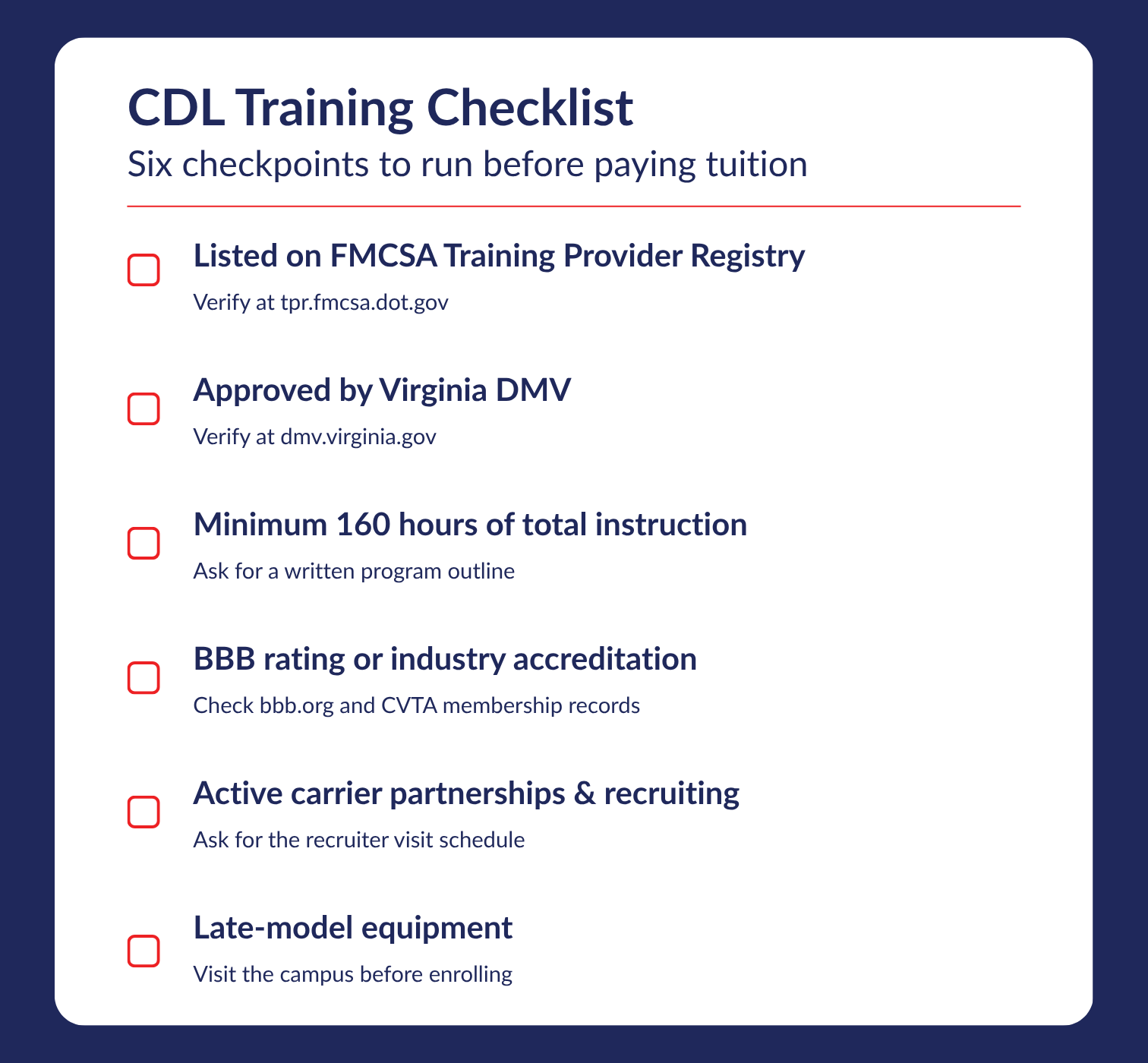
The checklist is simple: confirm registry status, ask for a written program outline, and visit the campus before signing anything. Here’s why each of those checkpoints matters.
How CDL Mills Differ from Legitimate CDL Training Programs
A CDL mill is a training provider that puts speed and enrollment numbers ahead of driving skill. These operations rush students through coursework and skip key behind-the-wheel phases. They often lack the credentials federal or state regulators require. Commercial trucks demand more skill, experience, and physical ability than passenger cars. A program that treats CDL training as a formality is setting students up to fail. Legitimate programs instead move students through a clear progression: classroom instruction, range practice, and on-road training. Each phase builds on the last.
Virginia’s freight routes keep driver demand high. They include the I-81 mountain corridor, the I-95 DC corridor, and the Hampton Roads port complex. The state expects about 4,886 truck driver openings each year. That demand gives some schools a reason to push underprepared drivers through fast, low-quality training.
Warning Signs of a CDL Mill
CDL mills cut corners in a few predictable ways. Here are the four warning signs prospective students should watch for.
1. Short Programs With Minimal Behind-the-Wheel Time
The federal government sets no minimum number of behind-the-wheel hours. Some programs finish CDL training in just a few days instead of the several weeks a new driver needs to build skill behind the wheel. Hours alone don’t guarantee readiness. A 2015 NIOSH survey found that 38% of commercial drivers felt their entry-level training hadn’t prepared them for everyday road and weather conditions, and it’s easy to see why. Skills like backing, shifting gears, and handling a loaded trailer take repetition to master. A student with only a handful of hours behind the wheel doesn’t get enough practice to build them.
How CDS Handles Training Hours
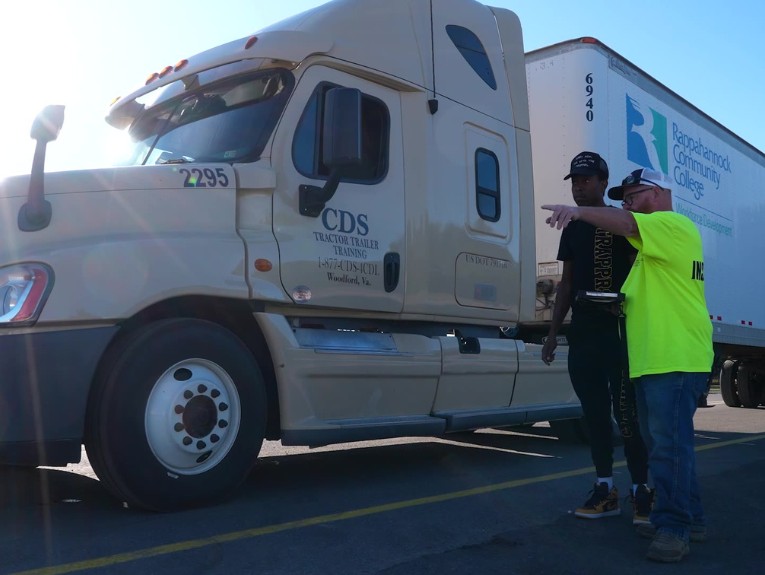
CDS’ Class A CDL program runs 20 days and 160 hours of instruction, covering classroom, range, and behind-the-wheel phases in order on late-model equipment. Before enrollment, the admissions team gives every student a breakdown of program hours, listing classroom, range, and road time separately so nothing is left to guesswork.
2. Missing FMCSA Registry Listing or Virginia DMV Approval
The FMCSA’s Entry-Level Driver Training rule took effect in February 2022. Since then, training only counts toward a CDL if it happens through a provider listed on the FMCSA Training Provider Registry. In late 2025, the U.S. Department of Transportation removed nearly 3,000 providers from the registry for faking training records or failing to keep proper documentation. Another 4,500 were placed on notice. A student who trains at a school that isn’t listed risks having their training thrown out entirely. Check every school against both the FMCSA Training Provider Registry and the Virginia DMV’s approved provider list before paying anything.
How CDS Handles Registry and DMV Approval
CDS has held Virginia DMV approval since 1999 and is listed on the FMCSA registry. It also has added oversight through training partnerships with New River and Germanna Community Colleges. This partnership-based oversight goes further than the minimum most CDL mills bother to meet.
3. No Accreditation, Carrier Partnerships, or Job Placement Help
Legitimate CDL training programs build relationships with carriers and pursue accreditation from groups like the Council on Occupational Education or the Commercial Vehicle Training Association (CVTA). They also help graduates find jobs, so new CDL holders start their job search with support instead of starting from scratch. Active carrier partnerships mean recruiters visit campus during training. Graduates leave with signed offers instead of a list of phone numbers.
How CDS Handles Accreditation and Job Placement
CDS holds a Better Business Bureau (BBB) A+ accreditation, has been a CVTA member since 2012, and joined the Virginia Trucking Association in 2016. Its dedicated Job Placement team helps most graduates secure multiple pre-hire offers before graduation.
4. High-Pressure Sales Tactics, Old Equipment, and Oversized Classes
Some CDL mill problems don’t show up until after a student enrolls. High-pressure tactics, outdated equipment, and oversized classes are different: these signs show up before a student ever signs anything.
- Urgency pressure: Lines like “enroll today or lose your spot,” meant to push a quick decision.
- Outdated equipment: Older trucks leave graduates unprepared for the equipment most fleets run.
- Oversized classes: Too many students sharing one truck means less driving time each.
- No written terms: Verbal promises about job placement or refunds that never show up in the contract.
How CDS Handles Equipment, Class Size, and Enrollment Terms
CDS trains on late-model equipment, keeps class sizes small, and offers clear funding options instead of demanding full payment upfront. There’s no pressure to enroll on the spot, and every term discussed with a recruiter shows up in writing before a student signs anything.
How to Choose a Legitimate CDL Training Program in Virginia
Spotting the four warning signs is half the work. Knowing exactly what to check for when looking for a legitimate CDL training program is the other half. The checklist below turns each red flag into a specific question a prospective student can ask before paying tuition.
Next Steps
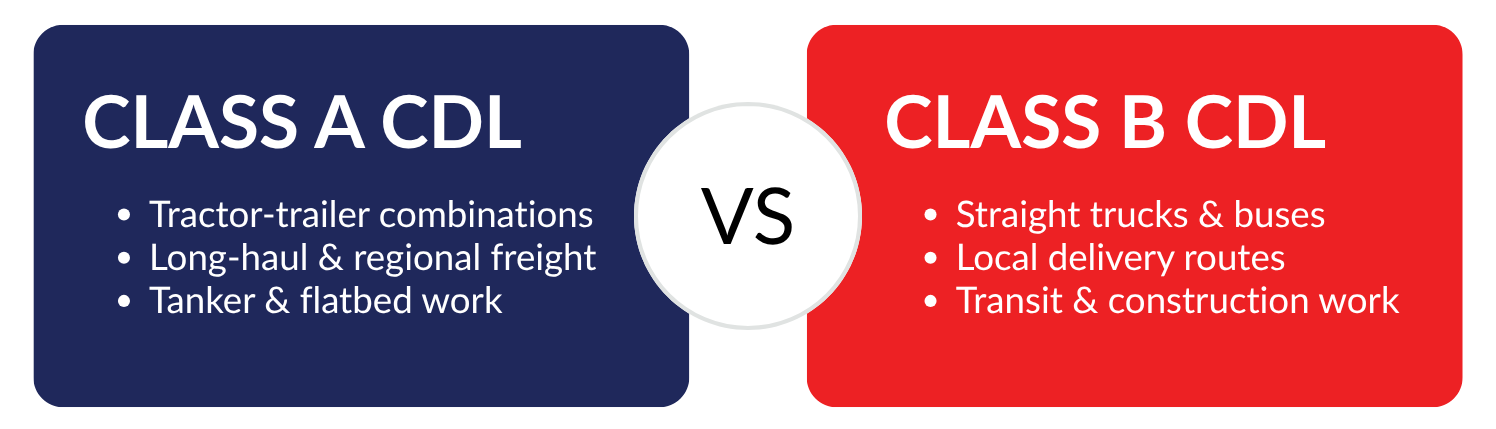
CDS offers Class A CDL training at four Virginia locations: Fredericksburg, Norfolk, Richmond, and Roanoke. Class B training is also available at the Fredericksburg and Norfolk campuses. Visit a campus, ask for a program outline, and use the checklist above before making a decision.
Learn more about CDS CDL Training or call (844) 654-2235.
FAQs
Is it illegal for a CDL mill to operate?
Not automatically. A school that meets minimum federal and state registration but still delivers weak training isn’t breaking the law. But falsifying training records or operating without required approval is a federal and state violation.
Does a lower price always mean a CDL school is a mill?
No. Some legitimate programs cost less because of grants or carrier partnerships, so price alone isn’t proof of a problem. Check registry status and training hours before assuming a cheap program is unsafe.
What should I look for during a CDL school campus visit?
Ask to see the training trucks, meet an instructor, and watch a class in session if possible. A school that won’t let visitors see the facility before enrollment is a warning sign.
Is online-only CDL training valid for a Virginia CDL?
No. The FMCSA requires behind-the-wheel training through a registered provider. A fully online program cannot meet that requirement for a Virginia CDL.
How can I check if a CDL school’s instructors are qualified?
Ask about each instructor’s years of driving experience and whether they hold a valid CDL themselves. A reputable school will share instructor backgrounds and let prospective students meet them before enrolling.